


Optimize your
Ads
Performance
with AI- powered intelligence
Analyze and optimize your campaign performance effortlessly with Adtify.



Trusted by 500+ Businesses Worldwide

































Campaign CTR
Manual Workload
Cost per Result
Optimization Speed
advertising suite
Our modular platform supports every stage of your advertising funnel - from audience insights and creative generation to budget optimization recommendations - helping you stay ahead in an increasingly competitive landscape.
Leverage real-time performance insights, dynamic AI recommendations, AI-assisted campaign workflows, and advanced analytics to improve efficiency, reduce wasted spend, and drive better results across your connected ad accounts.
Elevate
Adtify’s AI enables more personalized and relevant ad experiences - helping brands increase conversions, strengthen customer relationships, and operate more efficiently.


Instantly detect
RiskProtect
Ad PerformanceOur AI-powered Compliance Checker scans your ad creatives against Meta’s latest policy signals to help you identify potential risks before you publish on your ad platforms. Stay compliant, reduce rejections, and keep your ad accounts safe - all with one click.
Client Globally
Client Testimonials Around the World

As one of the top real estate teams in Canada, we leverage software like Adtify to help deploy new dynamic ad campaigns. With the least effort of a few clicks, this tool gives you the best shot in getting your audience’s attention.
Jordan M.
Real Estate Team Lead


Adtify has allowed me to run a fairly easy ad campaign for my e-commerce brand. The time it has saved me is hard to calculate and the best part is I don’t have to sacrifice quality for efficiency. The outputs are GREAT looking and have really helped me grow my brand.
Robert L.
E‑commerce Founder

This incredible platform not only saves time but also consistently delivers top-quality ad creatives. Since I started using Adtify, my campaigns have seen a substantial boost in performance. It’s a must-have for marketers and advertisers.
Juan C.
Performance Marketing Manager

I have been doing creative design for the past 8 years and I can tell you that this app is different. The quality of the AI behind Adtify blew me away and finally gives us production‑ready creatives without extra manual design work.
George G.
Creative Director

Adtify has allowed me to run ad campaigns for my e‑commerce brand with ease. The time it has saved me is huge and the best part is I don’t have to sacrifice quality for efficiency.
Cody T.
DTC Brand Owner

Automation, quality, and integrations are the top reasons to use Adtify for us. Posts are attractive and the value we add for social media marketing, lead generation, and PPC is awesome.
Ryan A.
Agency Owner

When I discovered Adtify I pretty much saw it as magic. It saved me hours, gave me lots of new graphics to use, and was easy to get started with.
Krystal C.
Freelance Media Buyer

I wish other services had AI as functional as Adtify. I’ve been using it for months without any issues and the support team is top notch.
Sam G.
Growth Marketer
Vertical AI Agent
Explore AI Agents for Specific Industries

E-commerce Brands
ProductGenius
AI-optimized creatives, audience targeting, and ROAS tracking for Shopify, DTC, and marketplace sellers.
 98.7K
98.7K
 456.2K
 421
421

Agencies & Media Buyers
ProductGenius
Manage multiple ad accounts, monitor compliance, test creatives, and scale performance from one dashboard.
98.7K
456.2K
421

Real Estate & Lead Generation
ProductGenius
Policy-safe lead ads, audience qualification, and conversion tracking for high-value prospects.
98.7K
456.2K
421

Mobile Apps & SaaS
ProductGenius
Creative iteration, campaign analytics, and attribution tracking to scale installs and subscriptions.
98.7K
456.2K
421

Education & Training Providers
ProductGenius
Lead filtering, ad compliance checks, and campaign insights to maximize enrollment performance.
98.7K
456.2K
421

Local & Small Businesses
ProductGenius
Simple campaign setup, AI compliance monitoring, and performance insights for everyday advertisers.
98.7K
456.2K
421
Integration
Connect your data. Power your AI.
Adtify connects to your Meta Pages and Ad Accounts to sync real-time data, powering AI-driven campaign creation, optimization, and performance insights.

Meta Pages
Adtify Support Team
Connect your Meta Pages to sync posts, engagement, and audience data for AI-powered campaign creation and optimization.

Meta Ad Accounts
Adtify Support Team
Import campaigns, ad sets, and creatives from your Meta ad accounts to analyze performance and identify optimization opportunities.

Meta Business Manager
Adtify Support Team
Link your Meta Business Manager to monitor account health, policy violations, and connected assets in one place.

Creative Data Sync
Adtify Support Team
Use content from your Meta Pages — including images, videos, and posts — as input for AI-generated ads and creative recommendations.

Campaign Data Sync
Adtify Support Team
Adtify continuously syncs campaign data from Meta to power AI-driven optimization, insights, and automated suggestions.
Performance & Audience Signals
Adtify Support Team
Engagement, clicks, and conversion signals from Meta are analyzed by AI to improve targeting and ad delivery.
Select Package
Choose the best plan for you
For professional advertisers and small agencies
- Manage ad campaigns
- Meta Ads AI tools
- Check Ads & Page violations
- Manage BM & Ad Accounts
- AI-generated images, ad visuals, and videos
- AI-powered ad content review
- More credits (lower price per credit)
For individuals and freelancers
- Manage ad campaigns
- Meta Ads AI tools
- Check Ads & Page violations
- Manage BM & Ad Accounts
- AI-generated images, ad visuals, and videos
- AI-powered ad content review
For professional advertisers and small agencies
- Manage ad campaigns
- Meta Ads AI tools
- Check Ads & Page violations
- Manage BM & Ad Accounts
- AI-generated images, ad visuals, and videos
- AI-powered ad content review
- More credits (lower price per credit)
Blog
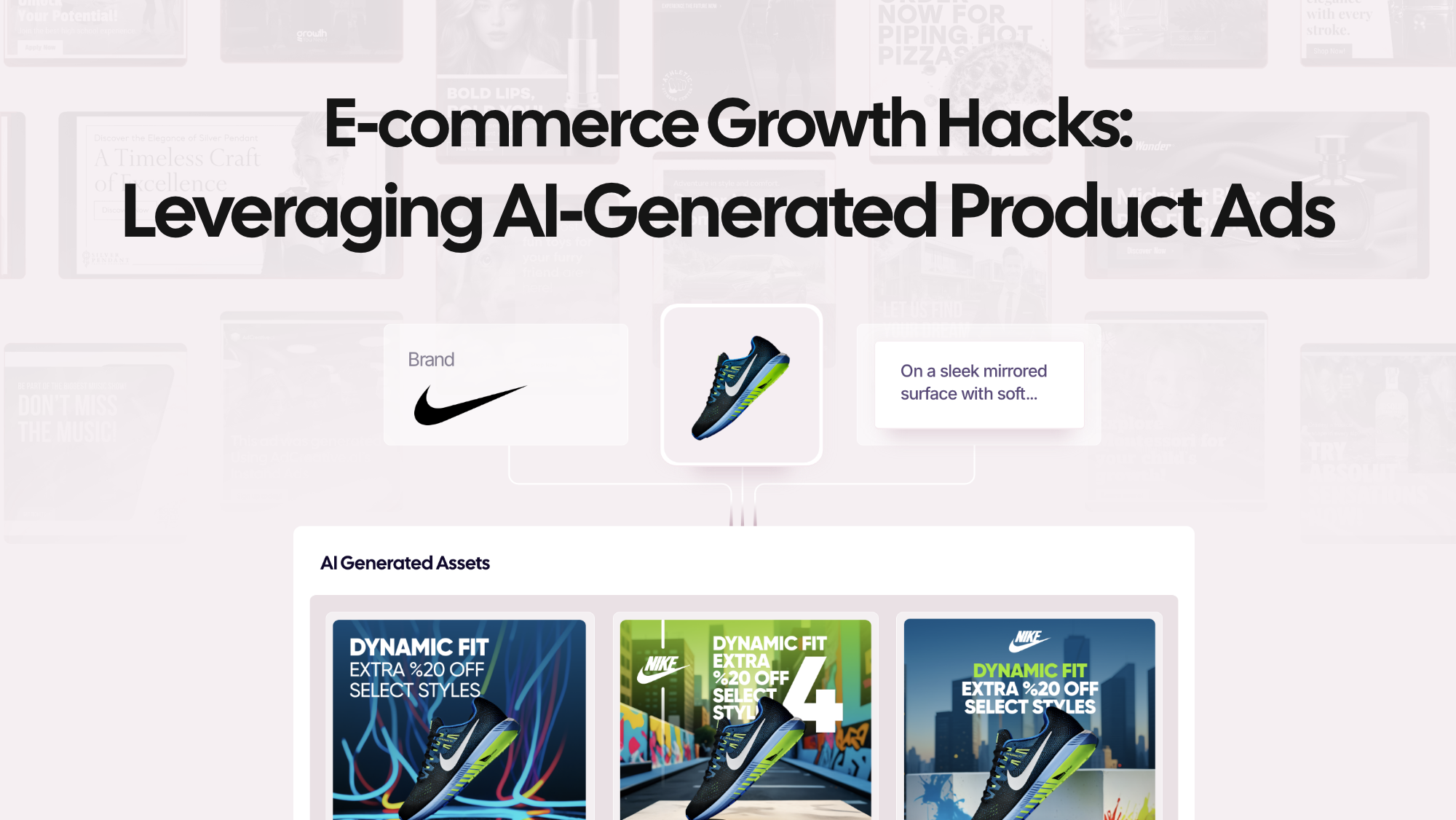


E-commerce Growth Hacks: Leveraging AI-Generated Product Ads
E-commerce is extremely competitive, and online businesses are always looking for ways to stand out. Whether it is a large brand like Sephora driving sales during a sale event or small businesses on platforms like Etsy trying to increase their customer base, everyone is looking for growth hacks that can give them an edge. Enter AI-generated product ads: a game-changing solution that transforms ad creation from a time-consuming chore into an automated, scalable growth engine. This article will explore how AI can revolutionize product-centric ads for e-commerce and Direct-to-Consumer (DTC) brands, especially those with large catalogs. By the end, you'll have a comprehensive understanding of how to leverage AI-generated product ads to drive your e-commerce growth. The Current Landscape: Challenges in Product Ad Production Before diving into the benefits of AI-generated product ads, let's examine some of the challenges businesses currently face in ad production. Creating high-quality ads at scale requires significant investments in creative teams, time, and budget. Manual Image Selection: Selecting images for each ad can take hours or even days, as businesses have to scroll through hundreds or thousands of products and choose the best ones for their audience. And that's if there isn't a product photoshoot involved, which can further delay the process. Copywriting and Ad Creative: Coming up with compelling ad copy and creative is another time-consuming task that requires brainstorming, testing, and iteration. Businesses often must hire copywriters or agencies to handle this part of the process. Constant Optimization: Once ads are launched, businesses need to constantly monitor and optimize performance to ensure they are driving results. This requires ongoing effort and resources, especially for businesses with large product catalogs. Unleashing the Power of AI-Generated Product Ads AI-generated product ads leverage artificial intelligence to create, optimize, and deliver relevant, high-quality creative assets at scale. This technology has quickly transformed the advertising landscape, offering solutions to long-standing pain points in e-commerce marketing. What Are AI-Generated Product Ads? AI-generated product ads are creatives produced or enhanced using artificial intelligence technology. These ads can: Automatically generate multiple ad variations Select high-performing creatives based on real-time data Optimize formats for different platforms and audiences Tools like AdCreative.ai use advanced algorithms and a vast database of high-converting ad creatives to generate customized ads that resonate with target audiences. Key Benefits of AI-Generated Product Ads for E-commerce Brands Unparalleled Scalability and Speed AI-powered ad generation allows e-commerce brands to create ads for hundreds or thousands of products simultaneously. This scalability is a game-changer for businesses with extensive catalogs. An apparel brand, for example, with 10,000 SKUs can now produce personalized ads for each product in minutes, a task that would have taken weeks or months using traditional methods. Enhanced Creative Performance through Personalization AI algorithms can analyze vast amounts of data to generate highly relevant product ads based on audience preferences and behaviors. This level of personalization leads to more engaging and effective advertising. Imagine a clothing brand that utilizes AI to create different ad versions for fashion enthusiasts and bargain hunters. The messaging and visuals can be tailored to each audience segment, maximizing the chances of conversion. Higher CTR and ROAS through Continuous Optimization One of the most significant advantages of AI-generated ads is their ability to learn and improve over time. AI tools analyze performance data in real-time, adjusting creatives to boost engagement and conversions. Creative Consistency Across Platforms According to Forbes, brands that maintain a consistent brand presence across all platforms can boost revenue by as much as 23%. AI ensures brand consistency by automatically resizing, reformatting, and optimizing ads for various platforms like Facebook, Instagram, TikTok, and Google Ads. This consistency reinforces brand identity, engenders familiarity and trust with consumers, and improves overall campaign performance. How to Get Started with AI-Generated Product Ads Now that we've explored the benefits, let's dive into how you can implement AI-generated product ads in your e-commerce marketing strategy. Select the Right AI Tools Choosing the appropriate AI tools is crucial for success. Understanding your business goals and target audience is essential in determining which AI tools will best suit your needs. Some platforms offer a one-size-fits-all solution, while others allow for customization based on specific objectives. When selecting a tool, consider factors such as integration capabilities, customization options, and alignment with your specific e-commerce needs. AdCreative.ai's Version 7 is an excellent example of a generative AI platform that is the standard for many e-commerce businesses. This recent update is equipped with a full suite of enterprise generative AI tools for marketing teams and customizable features that integrate with various ad platforms. Focus on Data and Personalization The effectiveness of AI-generated ads relies heavily on the quality of data you provide. To maximize results: Ensure your product data is accurate, comprehensive, and up-to-date. Implement robust audience segmentation to guide AI creative decisions. Continuously feed performance data back into your AI system for ongoing optimization. Test, Learn, and Scale Implementing AI-generated product ads should be a gradual process. Start small by testing AI-generated ads for a specific product line or category. Monitor performance closely, gather insights, and use them to make adjustments as needed. Once you see positive results, then you can scale up your AI efforts to include more product lines or target audiences. Real-Life Success: AI in Action Case Study: Heinz's "A.I. Ketchup" Campaign In 2022, Heinz launched the innovative "A.I. Ketchup" campaign, leveraging the text-to-image AI generator DALL-E 2 to visualize "ketchup" and related prompts. The campaign aimed to demonstrate Heinz's iconic status in pop culture and its dominance in the ketchup market. Key elements of the campaign: AI-generated imagery: Heinz used DALL-E 2 to create images based on prompts like "ketchup street art" and "impressionist painting of a ketchup bottle." Social media engagement: The brand encouraged users to share their own AI-generated ketchup prompts and images. Multi-platform approach: The campaign included a video showcasing AI-generated images and social media posts featuring the best user-submitted prompts. Results: Generated over 1.15 billion earned impressions globally. Achieved an engagement rate 38% higher than previous Heinz campaigns Attracted coverage from major media outlets like Fast Company, Bloomberg, and TechCrunch. Estimated exposure worth over 2500% more than the media investment. The "A.I. Ketchup" campaign successfully combined cutting-edge technology with creative marketing to reinforce Heinz's brand identity and market leadership in the ketchup industry. Best Practices and Potential Pitfalls Follow these essential best practices to unlock the full potential of AI-generated product ads. First, prioritize high-quality product data and imagery for better AI-generated results. Review your AI-generated content to ensure alignment with brand voice and messaging. Use data to drive creative iteration and personalization continuously, and for optimal results, combine AI-generated elements with human creativity. Some potential pitfalls to be aware of include an over-reliance on automation, which can lead to generic creative if not properly managed. Make sure to ensure compliance with advertising regulations, as AI may not always understand context. Additionally, make sure to monitor performance closely to catch and correct any AI-generated errors quickly. The Future of AI in E-commerce Advertising The role of AI in e-commerce advertising is set to expand even further. Here are some trends to watch for: Advanced Personalization: According to research by McKinsey, the use of AI for personalization in ads accounts for a 3-5% increase in customer acquisition. AI will enable hyper-personalized ads that adapt in real-time to individual user preferences and behaviors. Cross-Platform Optimization: AI tools will become increasingly adept at optimizing ad performance across multiple platforms simultaneously. Predictive Analytics: AI will not only optimize current campaigns but also predict future trends and consumer behaviors, allowing for proactive strategy adjustments. Integration with Other Marketing Technologies: AI-generated ads will seamlessly integrate with other martech solutions, creating a more holistic and efficient marketing ecosystem. Conclusion: Embracing the AI Revolution in E-commerce Advertising AI-generated product ads represent a significant leap forward for e-commerce and DTC brands looking to scale their advertising efforts, improve performance metrics, and stay competitive. By embracing AI-driven tools like AdCreative.ai, marketing directors and executives can transform their product advertising strategy and drive unprecedented growth. By embracing the power of AI-generated product ads, you're not just optimizing your current advertising efforts – you're future-proofing your e-commerce business for the next wave of digital marketing innovation. Ready to transform your e-commerce advertising strategy? Discover how AdCreative.ai can help you streamline creative production, boost CTR and ROAS, and scale your product advertising efforts efficiently. Try AdCreative.ai today and receive a 7-day free trial including 10 credits.
Connect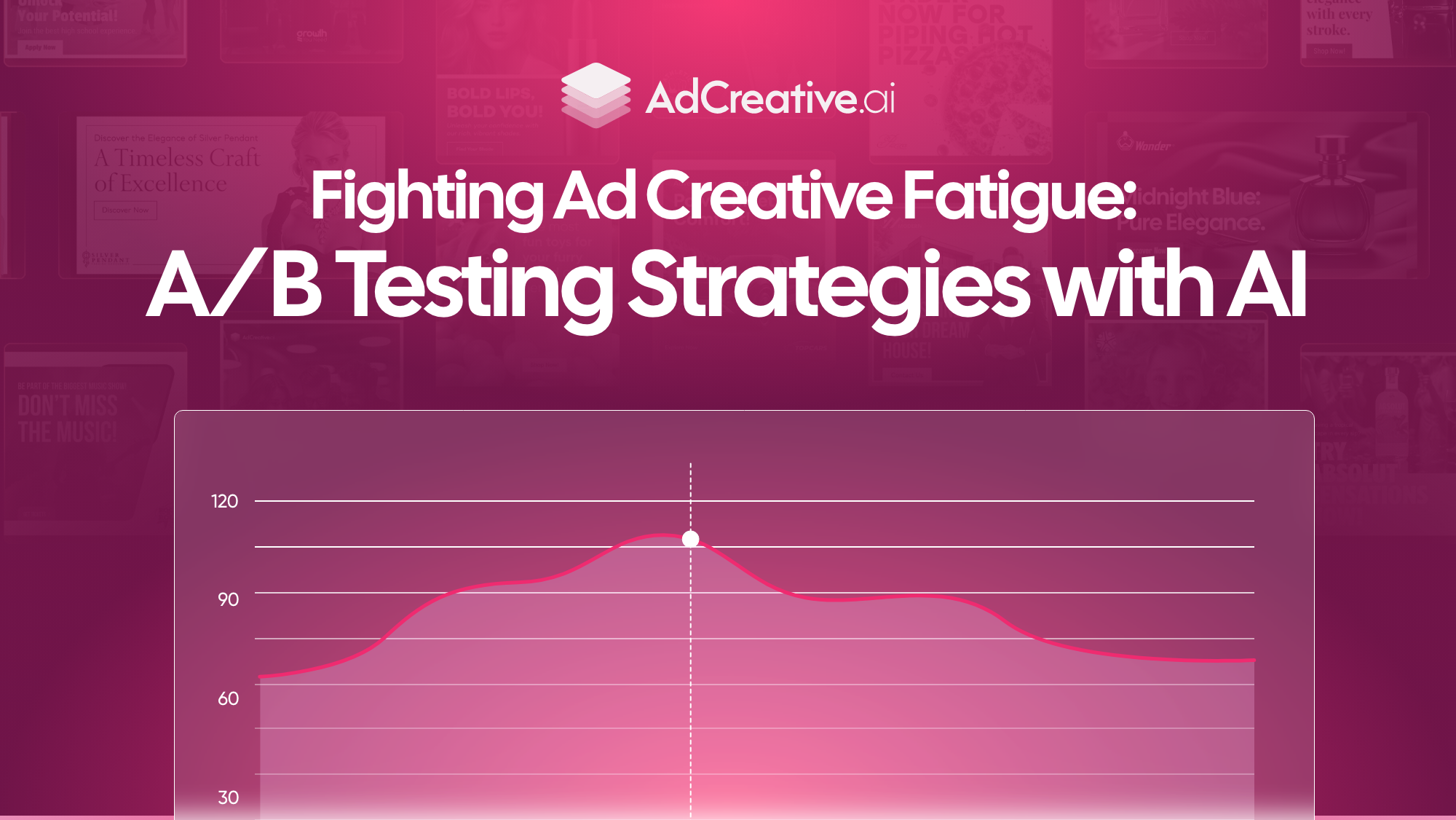
Fighting Ad Creative Fatigue: A/B Testing Strategies with AI
There is a well-known saying, "When everybody is planting apples, a visionary plants oranges,” that also holds true for advertising. In the always shifting playing field of digital marketing, businesses are constantly fighting to grab the attention of potential customers and stand out from their competitors. With so many advertisements bombarding consumers every day, the effectiveness of even the most compelling creatives can diminish over time. Ad fatigue, also known as ad creative fatigue, occurs when an audience becomes tired of seeing the same advertisement repeatedly. This can lead to decreased engagement and conversion rates, higher costs, and lower return on investment (ROI). So how can you combat ad creative fatigue? One effective strategy is A/B testing with the help of artificial intelligence (AI). Understanding Ad Creative Fatigue Ad creative fatigue happens when your audience grows too familiar with your ads, reducing their effectiveness, and leading to declining engagement. The symptoms of ad fatigue are often subtle at first but can quickly escalate if left unchecked. According to a recent article in Advertising Week, two-thirds of consumers consider ads intrusive, excessive, or irrelevant. Despite that, it goes on to say that branded content is the exception and provides an opportunity for brands to truly connect with consumers. Common Signs of Ad Fatigue: Declining click-through rates (CTRs) Increasing cost-per-click (CPC) Stagnant or dropping conversion rates Decreased overall ad performance The impact of creative fatigue on ad campaigns can be substantial. According to a study by Simulmedia, people who saw an ad 6-10 times were 4.1% less likely to buy a product than those who saw the ad 2-5 times. This highlights the delicate balance marketers must strike between ad frequency and effectiveness. The Role of AI in Combating Ad Fatigue It's no secret that artificial intelligence has revolutionized the advertising industry, and in the process, has provided innovative solutions to age-old problems like ad fatigue. AI-powered platforms like AdCreative.ai are at the forefront of this revolution, providing marketers with the ability to create and test multiple ad variations quickly and efficiently. How AI Detects Ad Fatigue Machine learning models analyze campaign performance in real-time, detecting performance dips early. These models can identify patterns and trends that human analysts might miss, allowing for proactive measures to combat fatigue before it significantly impacts campaign performance. For instance, AdCreative.ai's Creative Scoring AI model predicts ad performance with over 90% accuracy, allowing marketers to select the most effective creatives based on data. This level of precision in performance prediction is unmatched in the industry, making it an invaluable tool for enterprises looking to stay ahead in the competitive advertising landscape. Automated Creative Refresh One of the most powerful weapons against ad fatigue is the ability to refresh ad creatives continuously. AI-powered platforms can generate multiple variations of ad creatives quickly and efficiently, ensuring that your audience always sees fresh, engaging content. The benefit of this approach is twofold: it keeps your audience interested and engaged, while also preventing your ads from appearing stale and repetitive. AdCreative.ai, for example, uses generative AI technology to create high-performing ads tailored to each viewer's unique interests and preferences. This level of personalization helps combat ad fatigue and increases the likelihood of engagement and conversion. A/B Testing Strategies with AI A/B testing has long been a staple of digital marketing, allowing advertisers to compare different versions of their ads to determine which performs best. However, traditional A/B testing can be time-consuming and limited in scope. AI-powered A/B testing takes this concept to the next level, offering more comprehensive and efficient testing strategies. Why A/B Testing Matters in Combatting Ad Fatigue A/B testing is crucial in combatting ad fatigue as it ensures continuous optimization and relevance. By constantly testing new variations against current top performers, marketers can stay ahead of the fatigue curve, ensuring their ads remain fresh and effective. The reason this is so important is that it helps brands hone in on the type of content that delivers personalized experiences. And any marketer will tell you, personalization is key to engaging your audience and converting them into customers. Framework for Effective A/B Testing with AI Define Clear Objectives Before starting any A/B test, it's crucial to define clear objectives. What elements are you testing? What key performance indicators (KPIs) will you use to measure success? Common elements to test include: Ad copy Visuals (images or videos) Call-to-action (CTA) buttons Ad formats Audience segments Leverage AI Tools for Faster Iteration AI-powered platforms like AdCreative.ai can generate multiple ad variations quickly, allowing for more comprehensive testing. These tools can create variations based on successful past campaigns, industry trends, and platform-specific best practices. Monitor Performance in Real-Time AI dashboards offer continuous insights for rapid iteration. For example, AdCreative.ai's Creative Insights AI analyzes your ad performance, compares it with industry benchmarks, and offers tips to combat ad fatigue and enhance campaign effectiveness. Iterate and Optimize Continuously Don't just rely on initial results—use AI insights for long-term creative evolution. AI can help identify patterns in successful ads and apply these learnings to future creatives. Advanced A/B Testing Techniques with AI Multivariate Testing While traditional A/B testing compares two versions of an ad, multivariate testing allows you to test multiple variables simultaneously. AI can manage these complex tests efficiently, identifying winning combinations of elements that human analysts might overlook. Dynamic Creative Optimization (DCO) DCO uses AI to automatically assemble ad creatives in real-time based on user data and context. This allows for hyper-personalized ads that can significantly reduce fatigue and improve performance. Predictive Analytics AI can analyze historical data and current trends to predict which ad variations are likely to perform best before they're even launched. This can save valuable time and budget by focusing testing efforts on the most promising creatives. Case Study: Häagen-Dazs Leverages Mass A/B Testing with AdCreative.ai, Sees Major Engagement Challenge: In the competitive Spanish market, Häagen-Dazs faced the daunting task of effectively advertising its extensive lineup of products. Solution: The brand implemented AI-powered dynamic creative testing using AdCreative.ai's platform. The AI generated multiple ad variations, continuously optimizing based on performance data. Result: Häagen-Dazs used AdCreative.ai to generate over 150 distinct creatives for each product in their catalog. This resulted in a significant increase in engagement, with over 11,000 "get directions" clicks in April 2023. They also saw a decrease of $1.70 in the cost per thousand impressions (CPM). Best Practices for Implementing AI-Powered A/B Testing When implementing AI-powered A/B testing, it's important to keep a few best practices in mind to maximize results and efficiency. Start with a Solid Foundation: Ensure your basic ad elements (targeting, bidding strategy, etc.) are optimized before focusing on creative testing. Test One Element at a Time: While AI can handle complex multivariate tests, starting with single-element tests can provide clearer insights. Allow Sufficient Runtime: Give your tests enough time to gather statistically significant data. AI can help determine the optimal test duration. Continuously Refresh Your Creative Pool: Use AI to generate new ad variations regularly, keeping your content fresh and engaging. Learn from Your Data: Use AI-generated insights to inform your overall marketing strategy, not just individual ad campaigns. Conclusion The digital advertising landscape will no doubt continue to evolve, and AI-powered A/B testing is a crucial tool for staying ahead of the curve. With AI-powered A/B testing strategies, marketers can create, test, and optimize ad creatives at scale, ensuring their campaigns remain fresh and effective. By leveraging platforms like AdCreative.ai, businesses can tap into the power of AI to generate high-converting ad creatives, predict performance, and continuously optimize their campaigns. As we move further into the AI era of advertising, those who embrace these technologies will be well positioned to succeed in this rapidly changing landscape. Ready to learn more about how AdCreative.ai can revolutionize your advertising efforts and combat ad fatigue? Try AdCreative.ai today and receive a 7-day free trial including 10 credits.
Connect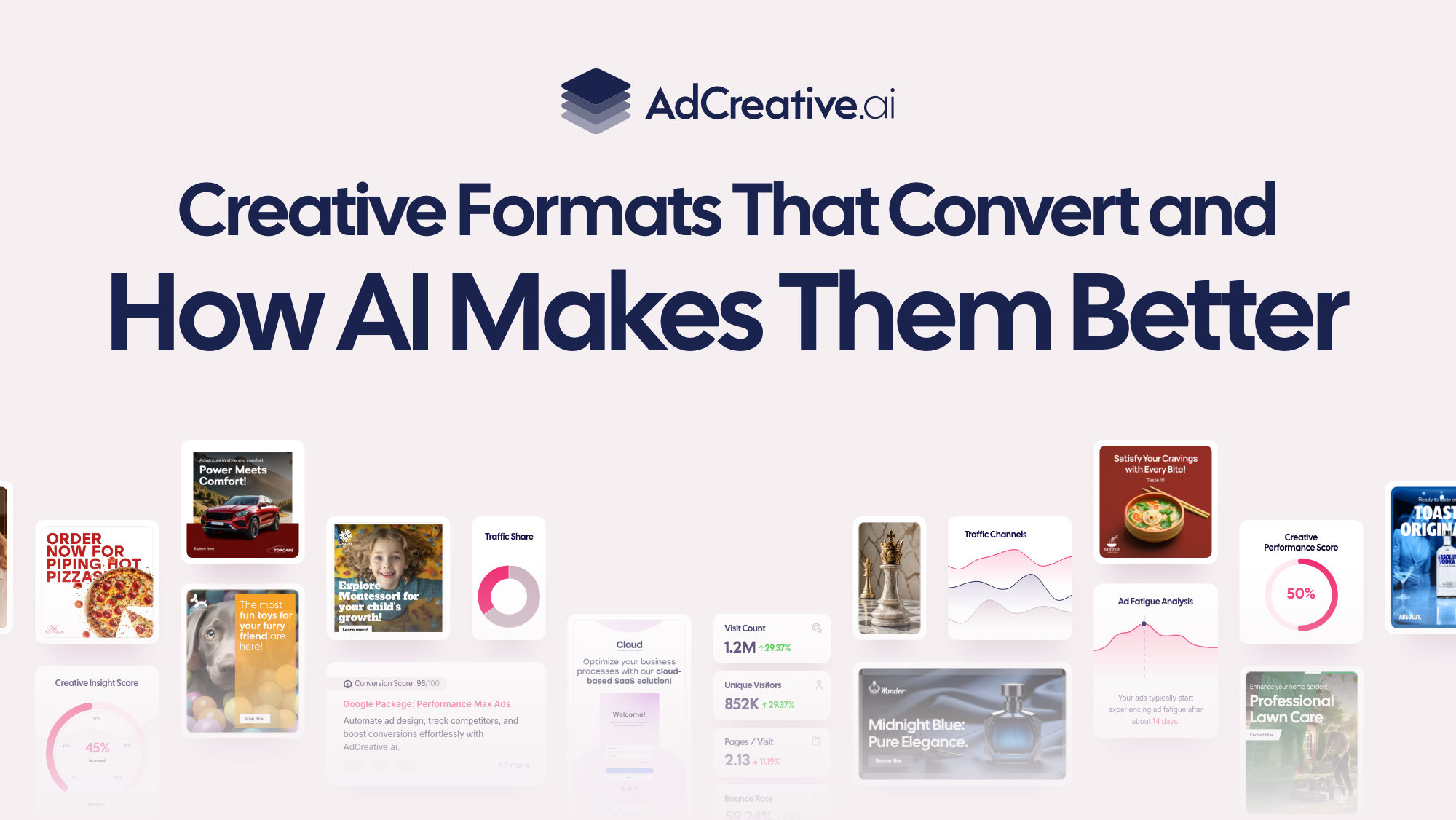
Creative Formats That Convert and How AI Makes Them Better
Digital marketers today operate in a hyper-competitive landscape. With the constant need for thumb-stopping content, marketers are pressured to deliver high-performing ads that cut through the noise and deliver bottom-line results. And perhaps nothing impacts conversions more than an ad’s creative format. But which creative formats truly drive results? And how can artificial intelligence (AI) supercharge their development and performance? There's no disputing that different ad creative formats yield different results. But what about AI? Can it really improve ad creative performance? The short answer is yes. With its ability to analyze data and predict outcomes, AI has revolutionized how digital marketers develop and optimize their ad creatives. The Performance Power of Format: Static vs. Video vs. Carousel vs. UGC Each creative format has its strengths, weaknesses, and ideal use cases. Let's break down the key players: Static Ads Fast-loading and clear in messaging, static ads are often overlooked but remain the backbone of any marketing campaign. They're especially effective for retargeting or product-focused campaigns. Generally speaking, however, they do tend to have a lower click-through rate (CTR) compared to video ads. Static ads excel at: Highlighting product details and specifications Showcasing discounts or promotions Retargeting campaigns with clear call-to-actions Short Video Ads Video ads grab attention and convey more information in less time, making them ideal for awareness and storytelling. And perhaps most importantly, consumers love video. In fact, a recent 2024 survey reported that 89% of consumers indicated that they wanted more video from brands. Video ads shine when: Demonstrating product use or unboxing experiences Telling brand stories or showcasing lifestyle integration Capturing attention in crowded social feeds Carousel Ads Perfect for showcasing product features or collections, carousel ads offer interactivity that drives higher engagement. Meta reports that carousel ads can achieve 30-50% lower cost-per-click (CPC) compared to static single-image ads. Carousel ads are particularly effective for: E-commerce product catalogs Storytelling through a series of images or videos Highlighting multiple features or benefits of a service User-Generated Content (UGC) UGC ads leverage authenticity and social proof, making them particularly powerful for e-commerce. They build trust and often lead to higher conversion rates, especially when featuring real customer experiences. UGC is most impactful when: Showcasing customer testimonials Demonstrating real-world product usage Building community around a brand Static vs Video Ads: The E-commerce Showdown In the e-commerce arena, both static and video ads have their place, but their effectiveness varies depending on the platform, funnel stage, and campaign objectives. Dollar Shave Club is an example of a video success story, demonstrating the impact that video can have on sales. Its now-famous video ad, "Our Blades Are F***ing Great," quickly went viral and attracted over 12,000 orders within two days of its release. If done right, a single, well-executed short video can drive massive engagement, customer acquisition, and brand awareness – as well as revenue. A HubSpot Community Case Study of static vs. video ads on Pinterest found that static ads outperformed video on Pinterest for brand awareness, suggesting platform-specific nuances. For brands and marketing professionals, this highlights the need to test both formats across platforms to identify what resonates best with audiences. To maximize the impact of both formats: Use static ads for retargeting and bottom-of-funnel campaigns Leverage video ads for top-of-funnel awareness and storytelling A/B test both formats to find what resonates best with your specific audience Consider the platform: Instagram Stories may favor video, while Facebook feed ads might perform better with static images The Rise of UGC AI: Authenticity Meets Technology User-generated content has long been a holy grail for marketers due to its authenticity and relatability. Now, AI is taking UGC to new heights. UGC AI refers to the use of artificial intelligence to generate or augment user-style video content, creating authentic-looking ads at scale. AdCreative.ai is pioneering this space, allowing brands to create realistic UGC-style videos without the need for traditional production. These tools can recreate voices, mimic influencer styles, and even generate entire personas. However, it's crucial to note that authenticity still matters. AI should augment real user experiences, not replace them entirely. Brands must strike a balance between leveraging AI capabilities and maintaining genuine connections with their audience. Key considerations for UGC AI: Transparency: Disclose when content is AI-generated to maintain trust Personalization: Use AI to tailor UGC-style content to specific audience segments Compliance: Ensure AI-generated content adheres to platform guidelines and regulations How AI Enhances Every Format AI is playing a critical role in enhancing all types of content. From written articles and social media posts to videos and images, AI is being used to improve content in various formats. Some ways AI is enhancing content include: Static Ads Tools like AdCreative.ai use AI to generate visuals, craft copy, and even run A/B tests automatically. This allows marketers to produce and iterate on static ads faster than ever before. AI enhancements for static ads include: Automated background removal and image enhancement Dynamic text optimization based on audience preferences Color palette suggestions based on brand guidelines and performance data Short Videos AI-powered video tools are dramatically simplifying video creation with automated editing, sound syncing, and transition effects. These advancements make professional-looking video ads accessible to brands of all sizes. AI video enhancements include: Automated video editing and scene selection Voice-over generation and lip-syncing Object and scene recognition for targeted ad placement Carousel Ads AI enhances carousel ads through automated product tagging, dynamic headline generation, and format personalization based on user behavior. This level of customization was previously unattainable at scale. AI-powered carousel ad features: Dynamic product sequencing based on user preferences Automated A/B testing of carousel card order Personalized headlines and descriptions for each card UGC AI Beyond video generation, AI is now capable of a multitude of tasks related to user-generated content (UGC). AI-powered tools can write scripts, create voice-overs, and even match content to specific brand personas. This dramatically reduces the cost and time associated with producing authentic-looking UGC. UGC AI capabilities: Generating realistic user testimonials Creating diverse avatar representations for inclusivity Adapting UGC-style content to different platforms and formats Scaling Creatives with AI: A System, Not a Shortcut The true power of AI in advertising lies in its ability to enable volume and variation at scale. Marketers can transform creative production from a bottleneck into a strategic advantage by leveraging AI to rapidly iterate and optimize their ad creatives. AdCreative.ai is the industry leader, offering an enterprise-grade solution that combines automated creative generation with AI-powered performance prediction to deliver what others can't: scalable creativity with measurable ROI. Ethical Considerations and Best Practices While AI offers tremendous potential, it's essential to approach its use in advertising ethically and responsibly. Many platforms now require acknowledging when AI has been used in ad creation. Here are some best practices to keep in mind when utilizing AI for ad creative generation: Transparency: Be transparent about the use of AI in ad creation and make sure users are aware of its presence. Data biases: Make sure the data used to train the AI algorithm is diverse and unbiased. Human oversight: Have a human team review and approve all AI-generated content before publishing to catch any potential ethical concerns. Protect user privacy: Ensure that personal information is not collected or shared without consent. Regular maintenance and updates: Continuously monitor and update AI tools to ensure they are functioning ethically and accurately. Conclusion: Embrace the AI-Powered Creative Revolution While winning ad formats may vary by platform, objective, and target audience, one thing is clear: AI enhances them all. By adopting an AI-powered creative strategy, marketers can test faster, scale what works, and stay ahead of the competition. Most importantly, they can create highly tailored and personalized experiences for their customers, resulting in higher engagement and ROI. While AI tools can significantly enhance the creation and optimization of various ad formats, the human touch remains crucial in strategy, emotional resonance, and ethical considerations. By embracing AI in your advertising efforts, you're not just keeping up with the times – you're positioning your brand at the forefront of marketing innovation. Ready to take your ad creatives to the next level? Visit AdCreative.ai to start your free 7-day trial and see the results for yourself.
Connect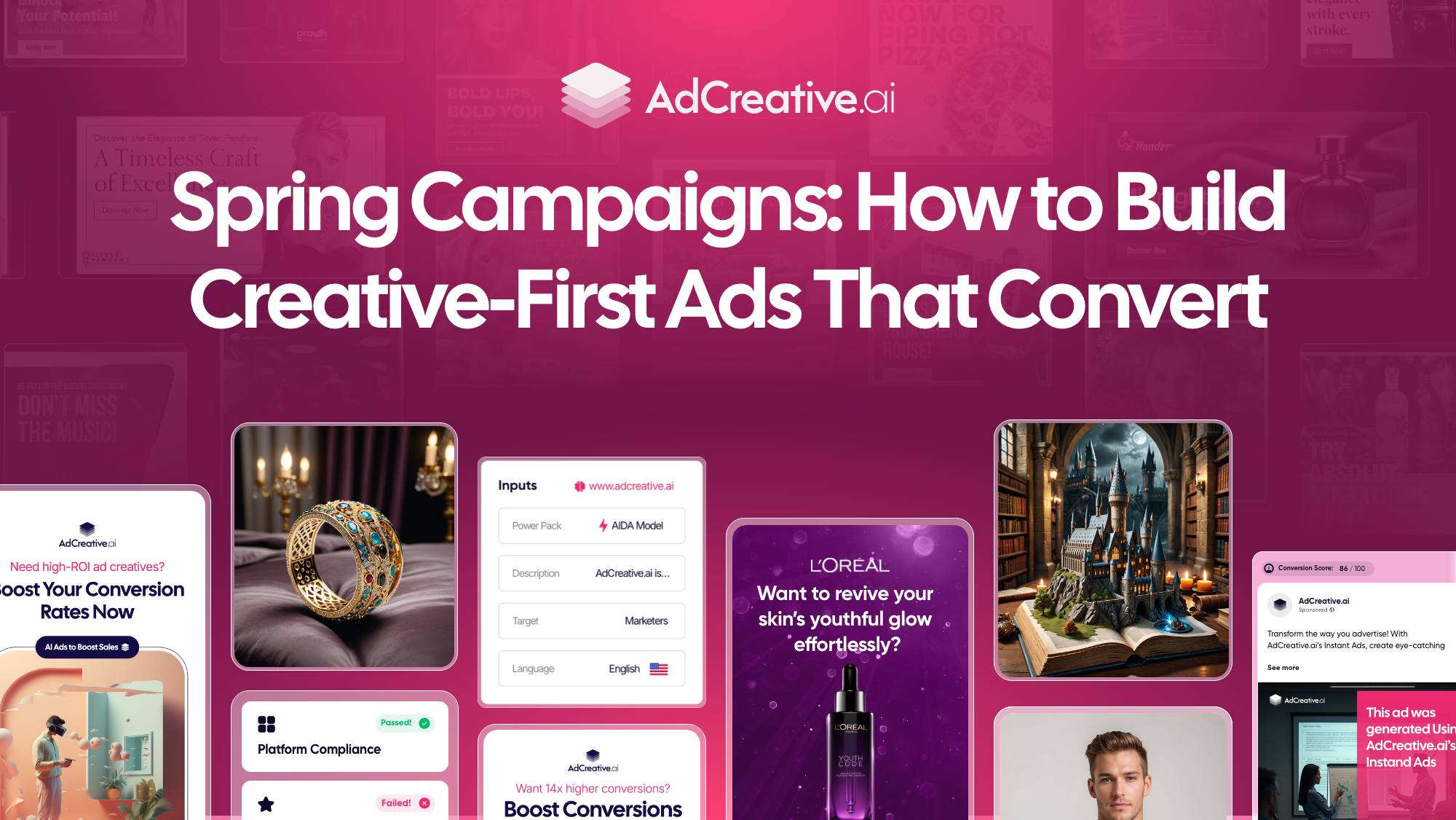
Spring Campaigns: How to Build Creative-First Ads That Convert
As the frost melts away and holiday initiatives become a distant memory, spring presents a golden opportunity for brands to captivate audiences with fresh, innovative ad campaigns. In a hyper-competitive digital advertising landscape, consumer attention is fleeting, and ad spaces are saturated. As a result, creating ads that prioritize visual and textual elements is a necessity for brands looking to stand out and convert. Launching new ads early in the spring (March, April, and May) is a great strategy to get ahead of competitors and capitalize on increased purchasing intent. Artificial intelligence (AI) is a powerful tool to assist in the creative process by helping to automate and scale the creative process. Whether you're planning Easter promotions, Mother's Day specials, or capitalizing on the general spring refresh mindset, the following is some tactical advice to elevate your campaigns across static, video, and user-generated content (UGC) formats. The Prime Opportunity of Spring Campaigns for E-Commerce Spring isn't just a season; it's a catalyst for consumer behavior shifts that savvy marketers can leverage. With Q2 product launches and spring clearances on the horizon, this period marks a significant uptick in shopping intent. This seasonal surge is driven by several key factors: Major holidays like Easter and Mother's Day create natural gift-giving occasions. The warmer weather sparks a desire for wardrobe updates and home refreshes. Increased outdoor activities spur purchases of lifestyle products, from fitness gear to picnic and beach essentials. Spring symbolizes renewal, making it an ideal time for brands to introduce new product lines or reinvigorate their marketing strategies. Sandwiched between the post-holiday slowdown (typically January – March) and the mid-summer slump, spring is a time when consumers are ready, willing, and able to eager to spend. Creative-First: The New Imperative in Ad Design We live in a mobile-first world, where users scroll through miles of content daily. According to Statista, mobile commerce was expected to generate almost two trillion in U.S. dollars by 2024, and account for 63 percent of total retail e-commerce by 2028. Given that, "creative-first" isn't just an approach—it's the difference between obscurity and virality. Creative-first advertising prioritizes thumb-stopping visuals and compelling narratives that resonate emotionally before presenting a sales pitch. Data suggests that strong creative is responsible for as much as 86% of sales lift in digital ads. This statistic underscores the critical role of innovative, eye-catching design in driving campaign success. A creative-first approach involves more than just aesthetically pleasing visuals. It requires a deep understanding of your audience's needs and desires, coupled with storytelling that captures the essence of spring renewal. This might involve showcasing products in aspirational spring settings, using color palettes that evoke feelings of freshness and growth, or crafting narratives around spring-themed transformations. Key Benefits of AI-Generated Creatives for Spring Ads The intersection of AI and advertising is revolutionizing how brands approach seasonal campaigns. By leveraging AI for spring ad creatives, marketers can overcome several traditional bottlenecks in the creative process to deliver highly effective seasonal content to their target audiences. Some of the key benefits of using AI in spring ad production include: Rapid Content Generation AI can rapidly generate hundreds of ad variants in minutes, all tailored to spring themes. This speed and scale allow for extensive A/B testing, helping brands identify the most effective creative elements quickly. Data-Driven Optimization AI also excels at analyzing performance data to refine and optimize creatives in real-time. Machine learning algorithms identify patterns in user engagement that might be invisible to the human eye, allowing for continuous improvement of ad performance throughout the season. Personalization at Scale AI facilitates personalization by tailoring ad content to specific audience segments based on user data and behavior. With AI, advertisers can dynamically adjust messaging, visuals, and calls-to-action to better resonate with different audience segments. This not only improves the user experience but also increases the likelihood of conversion. AdCreative.ai stands out as the leading platform for creating AI-powered ads, offering a solution that marries creativity with data-driven insights. Spring Ad Formats: Static, Video & UGC That Converts Static Ads: Quick Wins for Spring Static ads are a powerful tool in the digital marketer's arsenal. They can yield impressive results when implemented as a cornerstone of a comprehensive ad strategy. These ads rely on strong visual appeal to capture attention, and when infused with spring-themed elements, brands can jumpstart fresh, new connections with their audience. The key to success with static ads lies in their ability to convey a clear, compelling message at a glance. Consider using bright, pastel color palettes reminiscent of blooming flowers for spring campaigns. These colors are eye-catching and also evoke the freshness and renewal associated with the season. Showcasing spring collections or limited-time offers with clear, action-oriented CTAs can create a sense of urgency that drives conversions. Video Ads: Bringing Spring Ad Campaigns to Life Video content continues to dominate social feeds, offering unbeatable engagement potential. For spring campaigns, video ads are an opportunity to create immersive, emotional connections with your audience. As consumers stir from a post-holiday slumber, these types of ads have the potential to shake off the winter doldrums and bring a sense of excitement for the new season. Craft short-form videos (15-30 seconds) showcasing products in seasonal contexts. This could involve scenes of spring picnics, garden parties, or outdoor adventures that feature your products naturally within the environment. The key is to create aspirational content that viewers can easily imagine themselves in. Incorporate time-sensitive messaging like "Easter Weekend Special" or "Spring Break Must-Haves" to create urgency. These limited-time offers can be particularly effective when paired with visually appealing spring imagery. AdCreative.ai's AI Product Video Shoot Generator is an excellent tool to generate high-quality product videos in minutes by simply uploading an image of your product. UGC: Authenticity Meets Seasonality User-generated content (UGC) bridges the gap between brand messaging and authentic customer experiences. In the context of spring campaigns, UGC can be especially effective in building trust and relatability. Encourage creators to share "spring unboxing" videos or "how I style for spring" content. This type of UGC not only showcases your products in real-life spring scenarios but also provides social proof and inspiration for potential customers. Utilizing UGC in ads can significantly boost trust and relatability, especially on platforms like TikTok where authenticity is highly valued. Consider running UGC contests with spring themes to generate a wealth of seasonal content while engaging your community. Scaling Performance While Staying On-Brand As you ramp up spring campaigns, maintaining brand consistency while testing new creative approaches is crucial. This balance ensures that your increased ad volume and creative experimentation don't come at the cost of brand recognition. To achieve this balance, consider the following strategies: Modular Creative Templates: Develop templates that allow for easy seasonal updates while maintaining core brand elements. AI-Driven Adaptation: Use AI to adapt creatives automatically for different platforms, ensuring a consistent brand experience across channels. Brand Asset Library: Establish a robust library of brand assets, including spring-specific elements, to ensure visual consistency. Spring Campaign Do’s and Don’ts To truly take advantage of the spring season's pent-up demand and maximize the effectiveness of your campaigns, there are some key best practices to keep in mind. Leverage Seasonal Urgency Create a sense of limited-time opportunity around your spring offerings. This can be done through limited edition products, flash sales, or time-sensitive promotions. Utilize phrases such as “limited time only” to create a sense of urgency and drive customers to purchase. Refresh Visuals Regularly Update your ad creatives frequently to maintain engagement and reflect the dynamic nature of spring. This includes refreshing product images, creating new designs, and incorporating seasonal colors and themes into your visuals. Keeping your visuals fresh and relevant will keep customers interested and engaged with your brand. Test Early and Often Start testing early to optimize before peak season, using initial performance data to further refine your strategy. Utilize A/B testing to compare different ad elements such as visuals, copy, and targeting. Continuously test and analyze your results to iden tify what works best for your audience. Avoid generic "Spring Sale" messaging without clear value propositions and don't neglect mobile-first design principles. Wrapping Up: Your Springboard to Success Creative-first spring campaigns powered by AI offer unprecedented opportunities for e-commerce and DTC brands to stand out and drive conversions. By embracing industry-leading tools like AdCreative.ai, marketers can be first to market with their creatives at a time of year when consumers are actively looking to try new products. The spring season, with its themes of renewal and fresh starts, provides a unique canvas for creative advertising. By leveraging AI-generated creatives, marketers can explore a vast range of visual and messaging possibilities, quickly identifying what resonates most with their audience. This data-driven approach to creativity ensures that campaigns remain fresh and engaging throughout the season. Now's the time to audit your spring ad strategy and explore how AI can amplify your creative efforts. Visit AdCreative.ai to start your free 7-day trial and experience firsthand how AI-driven creativity can turn your spring campaigns into conversion powerhouses.
Connect
Cannes Lions 2025 Recap: Why CMOs and Creative Directors Must Pay Attention to AI
Cannes Lions 2025 Recap: Why CMOs and Creative Directors Must Pay Attention to AI Discover how AI took center stage at Cannes Lions 2025. Explore key takeaways for CMOs, creative directors, and agencies navigating the future of creativity and advertising technology. Will.i.am and Sir Martin Sorrell at Cannes Lions – Credit: LA Times AI Was the Star of Cannes Lions 2025 Last week, the global creative and marketing industries gathered in Cannes for the biggest event of the year: Cannes Lions 2025. While the beaches, parties, and yachts made headlines, the real story happened behind the scenes, where AI became the central topic for CMOs and creatives. From keynote stages to brand activations on the beach, AI was everywhere. Major players like Meta, TikTok, Google, Adobe, and Salesforce introduced groundbreaking tools, shared case studies, and explored how artificial intelligence is transforming creativity in marketing. What CMOs Learned in Cannes Today’s CMO is expected to deliver more content, faster and at scale, without compromising on brand consistency. The message from Cannes was clear: AI is the solution that enables that balance. Key insights for CMOs: 71% of CMOs are now investing over $10 million annually in AI-powered marketing Creative automation and AI-generated assets were among the most discussed topics AI is no longer experimental, it is becoming a core part of marketing infrastructure AI is helping global brands move at the speed of culture, without sacrificing storytelling, quality, or alignment with brand identity. AI Is Not Replacing Creativity, It Is Unlocking It One of the strongest sentiments echoed throughout Cannes was this: AI is not here to replace creatives, it is here to empower them. As Will.i.am said during the CMO Insider Breakfast, “AI is still early, like the first generation of video games. What we build with it depends on our imagination.” For creative directors and agencies, AI can: Speed up testing, iterations, and versioning Handle repetitive production tasks, allowing more time for ideation Expand capacity while staying true to brand aesthetics What AdCreative.ai Showed at Cannes Lions and Why It Matters The AdCreative.ai team was on the ground at our beachfront cabana, ready to talk real marketing with some of the most innovative teams in the world. With our signature pink branding and bold presence, we welcomed CMOs, performance marketers, creative directors, and partners throughout the week. We showcased new tools that bridge the gap between AI and creative excellence, including: Key features presented: Instant Ads that generate fresh creatives in minutes Brand fine-tuning to ensure every asset matches your identity A new video editor powered by AI that simplifies scale CMOs and creators left with Gaji Bags filled with creative resources and something more valuable — a fresh way of thinking about creative productivity. We also had the chance to speak with traditional agencies who are facing uncertainty around AI. Their reaction was not rejection, but curiosity and concern. The consensus was clear: AI is here to stay, and every agency must find their way to adapt. Our cabana sparked genuine conversations about how to build that bridge — together. What Cannes Lions Means for Your Team Whether you're a CMO navigating global campaigns or a creative director leading a small but mighty team, the takeaways from Cannes are significant: Three things you cannot ignore: AI is now a creative necessity Speed, personalization, and efficiency are non-negotiable The teams who implement AI thoughtfully will lead the next wave of performance-driven creativity The Future of Creativity Is AI-Augmented Missed us in Cannes? No problem. Book a live demo with our team and see how AdCreative.ai can become your creative engine for performance marketing. Start Your Free Trial
Connect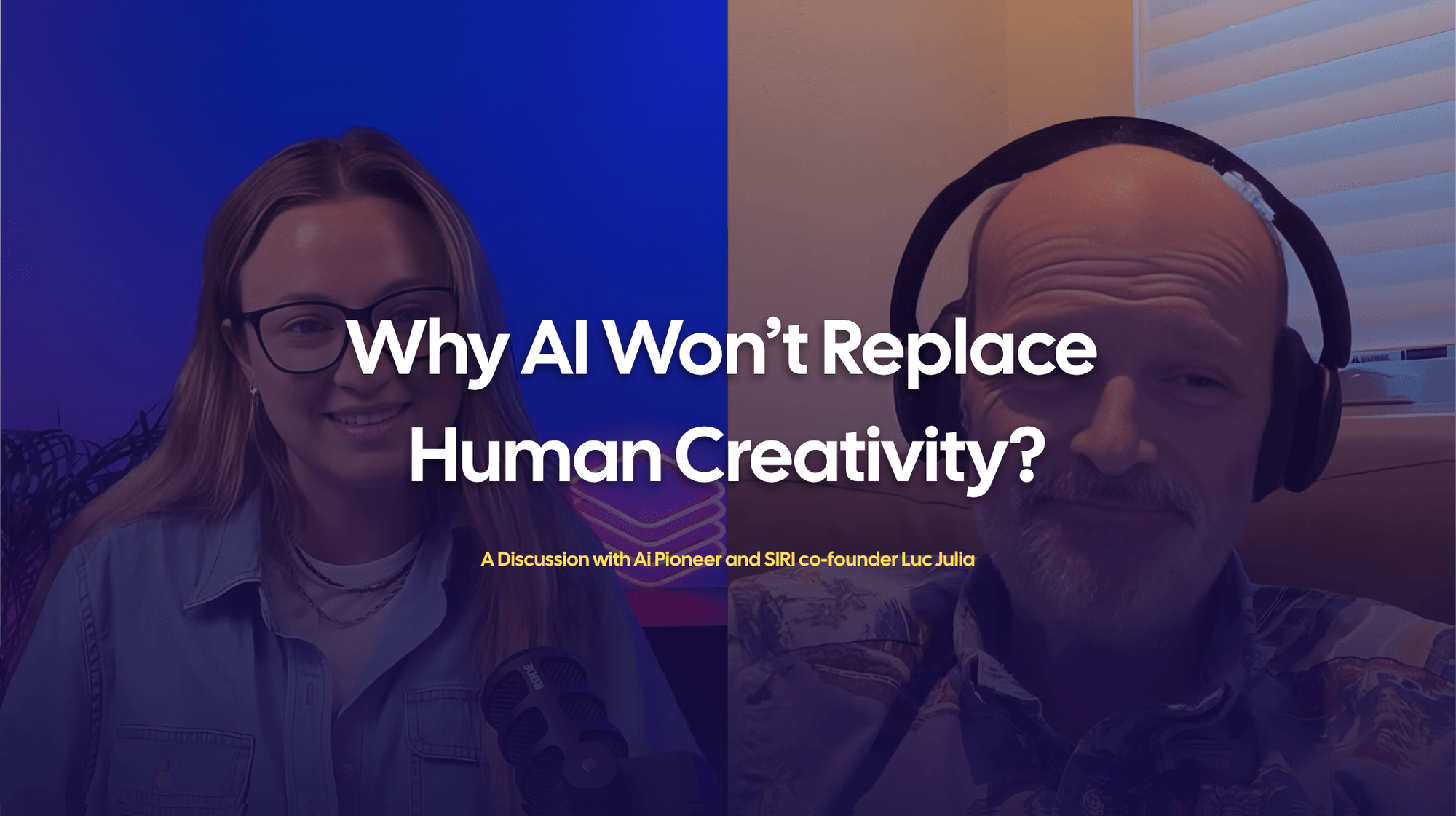
Why AI Won’t Replace Humain Creativity? A Discussion with Ai Pioneer and SIRI co-founder Luc Julia
Why AI Won’t Replace Humain Creativity? A Discussion with Ai Pioneer and SIRI co-founder Luc Julia Nicole Walsh sat down with Luc Julia, co-creator of Siri, to ask the questions marketers and creatives are thinking about. Will AI replace designers? Can machines be truly creative? And how should brands approach AI without losing their identity? Luc shared his honest take on where AI fits in the creative world and why humans are still at the center. Can AI Replace Creative Talent? That’s the question keeping many marketers and creative teams awake at night. Especially during this year’s Cannes Lions 2025, where AI wasn’t just a buzzword. It was the beating heart of the conversation. From beachfront cabanas to top-tier panels with leaders from Google, Adobe, and Meta, everyone was talking about the same thing. How will artificial intelligence change the way we create? To get an answer grounded in experience, not speculation, we turned to Luc Julia, co-creator of Siri and a long-time AI thought leader. In a recent internal podcast with the AdCreative.ai and Appier team, Luc shared his bold, refreshing take on the relationship between AI and creativity. And spoiler alert. It’s not as threatening as you might think. “AI Doesn’t Create. People Do.” Luc Julia’s position is clear. AI is powerful, but it’s not creative in the human sense. “AI is not going to invent anything. It doesn’t create, doesn’t invent, doesn’t innovate.” What does that mean in practice? Imagine asking a generative AI to design “a green car on top of the Eiffel Tower.” It can do it. Instantly. But that surreal, imaginative idea? It came from you. The AI simply produced what it was told, drawing from millions of pre-existing data points. It didn’t imagine anything new. This is a critical distinction for CMOs, creatives, and agencies worried about losing their value. AI is not replacing the creative spark. It is just making it faster and easier to turn ideas into content. The Picasso Test. Why True Creativity Breaks the Rules Luc brings it home with a compelling analogy. Picasso. “Nobody will become a Picasso with generative AI,” he explains. “What did Picasso do? He broke the rules. AI models don’t break rules. They remix what already exists.” This speaks directly to the creative director's dilemma. While AI can produce a dozen ad visuals or product videos in seconds, it will never replicate the brilliance of someone inventing a new visual language or rewriting cultural norms. Picasso’s genius was rebellion, not reproduction. The takeaway. Use AI for the execution. But never lose sight of the concept. That’s still your job as a creative thinker. Why This Matters for CMOs and Creative Teams At AdCreative.ai, we believe in augmenting human creativity. Not automating it away. That’s why Luc’s point of view aligns with the very tools we’re building: Speed without sacrificing brand: Our platform allows marketers to generate on-brand ads and visuals in minutes, so they can keep up with campaign demands without risking consistency. Scale without burnout: Creative teams can use our AI tools to quickly generate variations, freeing up time for bigger-picture thinking. Empowerment for non-creatives: Not everyone is a designer, but that doesn’t mean they can’t build great assets. Our platform helps everyone in the org contribute. From interns to CMOs. Luc said it best: “We use AI to make ourselves better. It’s a tool. Not a replacement.” This is especially true for CMOs who are now expected to deliver more campaigns, in more formats, with more personalization and less budget. AI is the only way to keep up. What Cannes Lions Taught Us. And Luc Proves It Luc Julia’s words echoed what we saw and heard firsthand at Cannes Lions 2025. While the visuals were dazzling. Branded yachts, massive booths, Gaji bags handed out like candy. The real conversations happened between sessions. Creative leaders and brand executives confessed they’re still figuring it out. The consensus. AI is here to stay. But those who succeed won’t just adopt the tools. They’ll integrate them with intent, keeping their human creativity at the center. Final Word. AI Isn’t the End of Creativity. It’s the Start of a New Chapter Luc Julia’s insights should reassure every CMO, creative director, or strategist who’s felt the pressure of AI hype. The technology is evolving rapidly. But the human imagination still sets the direction. The future of creativity? It’s powered by AI. But it’s driven by you. Want More?
Connect